
Tag: Apple

Hooked on TV or Apple TV or Maybe Both?

I have been hooked on my Apple TV ever since I set it a few months ago.  The small sleek black box lounging comfortably next to my cable box has become a symbol of home and comfort. My Apple TV is my friend. It carries all of my music, movies, and TV shows around for me. I access iTunes, Netflix, Hulu, Youtube, HBO Go, ESPN, etc.

It seems that a lot of people have also thoroughly enjoyed the entertainment possibilities Apple TV provides. Since January 1, 2013, 6 million 3rd generation Apple TV units were sold. According to Nielson, 98 percent of homes own a TV. Most people have some kind of device hooked up to their television whether it be the Apple TV or some other DVR entertainment device.

step1-appletv-heroThe updated software, which integrated iTunes Radio and various other applications included several Disney channels, the Smithsonian Channel, the MLS, Vevo, and the Weather Channel. While I continue to find new and fun ways to use Apple TV, the honeymoon period of owning such a fantastic device has not subsided. Being able to access an entire iTunes library on a TV seems like an incredibly exhilarating experience. Apple even manufactured an incredibly sleek controller that screams Cupertino!

Not to undermine the obvious success that Apple TV has accumulated, Keith Loria, a writer for CMO.com, has written an extensive article documenting the short falls of “television complimenting devices,” and points to societal norms as a possible reason for a plateau effect on sales and uses. He writes, the TV is still very relevant, “because of the family and group dynamic of watching TV together in households.” (1) He goes on to quote Jay Miletsky, CEO of Sequel Media Group, stating, “The TV experience is a completely different experience that the experience of watching video content on a PC or mobile device. For one thing, TV is more communal- you watch with your friends or family, while PCs and mobile devices are more isolating… TV is a more of a ‘lean-back’ vs. ‘lean-on’ experience, where people watch TV with more of a relaxed attitude that they do strictly Web content.” (1)

While such societal tendencies to communally watch television –or entertainment in general –may for the time being put a ceiling on auxiliary entertainment devices. Erik Dochtermann, CEO of KD+E, a media research agency, believes that in “the long term, the spread of TV viewing to other mobile devices will be more rapid as the younger generation gets older, as their viewing habits are significantly different than the previous generation.”(1) Which may lead to way more impressive and integrated entertainment devices, but for now Apple is the King of such a genre of entertainment, and I would put my money on them continuing its superiority in the future.

1. Loria, Keith. “Insight/ Traditional Media.” New Life For Old Media. N.p., n.d. Web. 01 Oct. 2013.

Until next time,

Kelli Richards, President & CEO of the All Access Group, LLC

PS: Subscribe to my FREE All Access Group Newsletter https://bit.ly/AAGNewletter

PSS: Listen to an entire library of intimate discussions with industry visionaries https://bit.ly/AllAccessPodcastSeries (Priceless)


IFTTT – “Put the internet to work for you”

Apple has taken Charmin-Ultra’s motto and mastered the notion that “Less is More;” championing a simple message with a plain white background, leaving their audience fiending for their latest product. Who can remember the iPhone 3g commercial discussing the vastness of the App Store? “Whats great about the iPhone, is that if you want to check snow conditions on the mountain, there’s an app for that. If you want to check how many calories are in your lunch, there’s an app for that. And if you want to know exactly where you parked the car, there’s even an app for that.” Before declaring, “Yup, there’s an app for just about everything, only on the iPhone.” Brilliant.

Four years have passed, and Apple has not backed down on its word, there literally is an app for everything: from voice translators, to Instagram, to Despicable Me video games, and Nike fitness trackers. And now there is even an application that can pick up on triggers from other apps and set in motion a series of actions through other applications.

This Rube Goldberg-esque application is called IFTTT, pronounced “Gift” with a silent “G” (Billy Madison would have a tough time with that one) and is, according to their website, a “service that lets you create powerful connections with one simple statement,” called a recipe. These “recipes” work on an “If This Then That” platform, the “this” being a trigger, and the “that” an action- in attempt to mimic, and even follow through on our impulses automatically.

An example of a IFTTT process would be identifying when you were tagged in a picture on Facebook and automatically saving the image to DropBox. (If I am tagged in a picture, then save it to DropBox.) IFTTT (Gift) currently has 67 channels, all with their own unique triggers and actions. Channels vary from Blogger to Craigslist, ESPN to Last.fm, and Google Calendar to YouTube. The possibilities seem endless. Shared “recipes” include, “Send me a joke when it rains so I won’t be depressed,” “Good morning Twitter at 8am,” “New movies on DVD, add to Google calendar,” and “When I post to Facebook, post it to Twitter as well.”

The apps that help manage our lives seem endless. Now if only there was an app for when I’ve misplaced my iPhone…oh wait, there is!

Until next time,

Kelli Richards, CEO of The All Access Group, LLC

Why You Should Learn From Steve Jobs, Not Idolize Him

why-learn-from-steve-jobsImitation may be the highest form of flattery, but it’s not a winning-business strategy.

Steve Jobs not only revolutionized the way we listen to music and use a telephone, he also changed our understanding of a computer and even recaptured our ability to fall in love with films through his work with Pixar.

Without a doubt, young entrepreneurs can learn endlessly from Jobs’ example, but they shouldn’t adhere too closely to his image. After all, he may have been a design genius but he did ruffle a few feathers.

He disregarded every “rule” and regarded his mentors and role models loosely. Even he would hardly advise someone to emulate him. I think it’s far more likely he would say: “The best way to be like me is to be more fully yourself.”

Still, you can learn an awful lot from the man. Here are a few very specific things that up-and-comers can learn from Jobs’ example:

1. Keep the customer experience in focus. Jobs was a master at getting into customers’ minds. He knew what we wanted — and how we wanted it — often long before we did.

2. Have an eye for beauty. It couldn’t just work well. Steve knew that it also had to feel good to touch, be delightful to use, and be exceptionally beautiful to look at.

3. Foster innovation. Do you remember a time without an iPhone? How about an iPod? Steve created products and product categories no one even had a frame of reference for and made them central to our lives.

4. Insist upon excellence. Jobs had little patience for people who didn’t think things through, and he pushed the people around him to be their best. He accepted no substitutes and inspired great loyalty.

Finally, if there is one powerful absolute to learn from Steve Jobs, it is to focus on your customers and put them before everything else. Think about rabid Apple users — the ones who stand in line outside of a store for hours awaiting the release of the next iPhone. They’ve done more to grow the brand than Apple itself ever has.

You will never replicate that by trying to be Steve Jobs. But, if you ask these questions to apply his laser-focused attention to your own customers, you can definitely inspire that kind of brand advocacy.

Are we surprising and delighting our customers while also delivering a consistent experience?

Are our products and services frictionless for our customers to use and enjoy?

Are we meeting their needs each and every time they interact with our company?

Are we iterating and innovating with a product pipeline that’s in line with (or ahead of) the market?

Are we blazing new trails?

How do you inspire brand advocacy? Let us know with a comment.


Original blog posted on YoungEntrepreneur.com. View it here: https://www.youngentrepreneur.com/blog/entrepreneurship/why-you-should-lean-from-steve-jobs-not-idolize-him/

I would appreciate your feedback in the comments section.

Until next time,

Kelli Richards, CEO of The All Access Group, LLC

iWork for iCloud

It seems like it was just a matter of time before Apple coordinated its iCloud technology, currently used for bringing media stored in iTunes (music, movies, tv shows, etc.) to all your Apple products, with its iWork platform- syncing Apples version of Microsoft Office to iPhones iPads and Macs alike.

Notice that, I referred to iWork as Apples version of Office, as it very may well be the only thing that Microsoft does better than its Silicon Valley competitor. Its unusual to think about Apple as a little brother, or an inferior, for lack of a better word, in any product that is knighted with the bite-missing Apple symbol; and it appears that the head honchos of Apple will be putting an end to Microsofts control of work documents in the Fall- restoring order to the world.

2

The implementation of iWork with iCloud will be game changing, swinging the proverbial momentum in favor of Apple. Whereas one would previously have to transfer files via email or convert documents into a Google Drive in order to access them away from the office, classroom or kitchen table, with iCloud files stored through Pages, Numbers, or Keynote can be accessed on all devices. So, no more searching through emails, or rummaging through Google Docs, just simply open the desired application and choose your document, accessing the file like a song you purchased on your iPad and played on your iPhone.

The most unnerving aspect of “iWork for iCloud,” for Microsoft at least, is that it will bring Pages, Numbers, and Keynote to PC’s as well. But can the tides turn that rapidly? Can this relationship in which Microsoft had its hands in Apples cookie jar all of sudden flip to where Microsoft is groping at thin air, while Apple enjoys all the spoils?

Until next time,

Kelli Richards, CEO of The All Access Group, LLC

Futuristic Mac Pro “Pretty Hot”

Picture 2

In a rare move at the Worldwide Developers Conference in San Francisco on June 10th, Apple offered a sneak preview of what Philip Schiller, Apple’s Senior Vice President of Worldwide Marketing, calls “the most radical Mac yet.”

Referring to the newly redesigned Mac Pro, one of Apple’s most expensive products and one favored by creative types, the desktop has indeed received an impressive overhaul – its first real update in years.

The new Mac Pro is architected around a unified thermal core, allowing the desktop to “efficiently share its entire thermal capacity across all processors” – resulting in what Apple assures us to be “breakthrough performance” from a machine that is “optimized for performance inside and out.”

The new system features next-generation Intel Xeon E5 processors with up to 12 core configurations, delivering double the floating point performance, as well as the fastest ECC memory ever seen in a Mac with 60 GBps bandwidth. It boasts flash memory up to ten times faster than the previous model, and video performance up to two and a half times better than the last generation thanks to dual workstation GPUs.

“Can’t innovate anymore, my ass,” Schiller quipped after showing off a video of the new hardware, which prompted loud cheers from the WDC audience. NBC tech editor Wilson Rothman agrees, calling the new desktop, which is capable of driving three 4k resolution displays, “pretty hot.”

With six Thunderbolt 2 ports that can deliver up to 20Gbps of bandwidth to each external device, the next generation Mac Pro is “the most expandable Mac ever built,” according to Apple. “Each of the six Thunderbolt 2 ports supports up to six daisy-chained devices, giving you the ability to connect up to 36 high-performance peripherals. Thunderbolt 2 is completely backwards compatible with existing Thunderbolt peripherals, and allows you to transfer data between Macs faster and easier than ever.

As if these specs weren’t already impressive enough, all this processing power and expandability is packed into a dramatic new cylindrical design that is merely one-eighth the volume of the previous generation, standing only 9.9 inches tall – what Rothman calls “a gnome” next to its predecessor. The entire top of the new model is a handle, making it supremely portable, while ports are all located in the back.

“Best of all,” Schiller concludes, this futuristic machine “will be assembled here in the USA.”

Geared to professionals, the Mac Pro has already generated a lot of excitement, despite the fact that it won’t be available until “later this year.” Though Apple did not offer any pricing on the system, the current model starts at $2,499.

Until next time,

Kelli Richards, CEO of The All Access Group, LLC

An Intimate Talk with Michael Dorf of The Knitting Factory and City Winery

Michael-DorfI recently invited Michael Dorf, former chairman and CEO of The Knitting Factory and founder of City Winery, to talk with me on my Blog Talk Radio show, All Access Radio. Michael, being the entrepreneur that he is, started the Knitting Factory, a combination café, art, and performance space housed in Lower Manhattan at age 23. He left the Knitting Factory in 2003 and transformed his career from art and music to incorporate another passion, wine. He created City Winery in 2007, the first fully operational winery in Manhattan.

My path first crossed Dorf’s in 1994 when he produced the Apple MACFEST, the first on going live streaming of music from a club. This was during my tenure running the music initiatives at Apple with a small team. It has been a long time since we’ve connected, but in the interview we both confessed to following each other’s careers on the Internet.Wine-Spectator

When asked about his early experience with Apple MACFEST and how it opened doors for him he responded, “We were mimicking and experimenting with what we were doing at the Knitting Factory and tried to make it into a large festival with what we were doing with Apple. It felt like experimentation. No one really knew what was going on. We knew this was a potentially powerful tool, but we didn’t really understand it.“ He went on to say, “When you’re a promoter or a true promoter, your role is to connect the music and artists to as many people as you can and do it in a way that makes sense for all parties – the audience, the performers, and the venders. Really, that was the approach we were taking and we just though that was a really powerful way of expanding what we were doing.”

Our interview provided insight into his time as CEO of the Knitting Factory and the bridge between that career and his current venture, City Winery. To hear the full interview, click here.

You can hear my entire interview series on my website at https://allaccessgroup.com under the Resources Tab / BlogTalkRadio.

Until next time,

Kelli Richards, CEO of The All Access Group, LLC

Sony’s decline: Have they eaten the poison Apple?

Sony and Apple“Those who cannot remember the past are condemned to repeat it.” – George Santayana, 1905
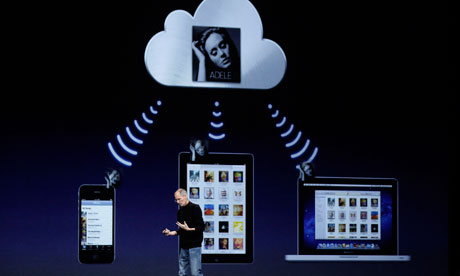
For today’s history lesson, we’re going to look at two of the biggest names in the tech industry that have risen and fallen in complimentary distribution with one another since the 1980’s.

As one company climbed to the top, the other plummeted but now the tides have changed.

I’m talking of course about Sony and Apple, two companies with storied histories that bare some key similarities to each other. In the successes and failures of each company, the brilliance and blunders seem to be passed back and forth. In order to move forward towards the future, we must look back at the past; so let’s take it from the top.

The 1980’s were a strange time in America; MTV, big hair, and the Brat Pack are some of the first things that come to mind when I think of that decade. Of course, the 1980’s also ushered in a new era of technology, and Apple and Sony were at the forefront. In the beginning of the 1980’s, Apple came out strong with a record breaking IPO and the Macintosh computer. Things quickly went south for the computer giant, as infighting and a decline in sales ultimately saw Steve Jobs leave the company in 1985; beginning what many would refer to as “the dark years” at Apple. During that same time, Sony had started the 1980’s with dismal profits during a global recession that saw a drop in electronics sales.

One of the things that saved Sony was its creativity and drive to pioneer new technologies. While it lost the “format wars” between VHS and Betamax, it was able to move past and eventually develop technologies such as the Compact Disc and Walkman. Similarly, it branched out beyond consumer electronics and got into the music and movie publishing industries; creating a revenue stream that would allow it to profit several times over from single products. Its latest demise, however, came from the company aggressively expanding into new businesses and technologies with little communication or collaboration between the departments. The question now is “Will they bounce back?”

Apple was able to bounce back from those “dark years” when Steve Jobs came back. Under his leadership, the company was able to re-focus and re-establish its brand. They were able to focus on creating great products from top to bottom, coupled with a user experience that was second to none. If Sony wishes to recover in the same way Apple did, then perhaps they’ll do the same. Sony’s reach is a bit broader than Apple’s so in order to do that, they’ll need to increase the communication and support between departments. They have all the parts they need to return to the top, they just have to deliver what the customers want. Apple delivered things that consumers wanted before they even knew that they wanted them. Sony’s approach as of late has been more stagnant, where they wait for something to come out and find a way to replicate it.

The sting of a few hard blows to a company can send it reeling and certainly bruise some egos. Sony needs to take a whiff of the smelling salts and come out of the corner swinging. Once they return to their roots of innovation, creativity, and quality they’ll be sure to see success once again.

Kelli Richards

CEO of The All Access Group, LLC

Something Special About Apple and iOS

Kelli Richards - All Access GroupThe special needs community is rarely the target demographic for the tech industry. Many of the wonderful new gizmos and gadgets that come out simply aren’t designed for them. There are an increasing number of companies that are developing products and technology to make computers and mobile devices more accessible for the special needs community, however – and one of those companies happens to be Apple, Inc.
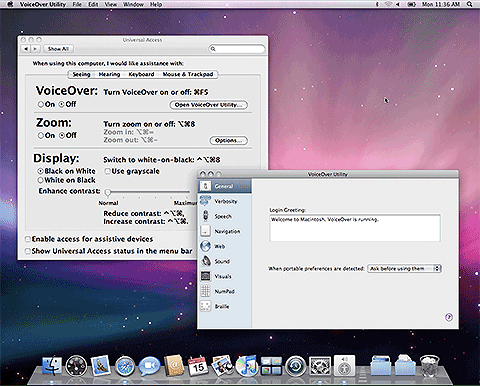
Apple’s VoiceOver technology was introduced with OSX 10.5 – better known as “Tiger.” It’s an accessibility feature that allows blind or visually impaired users to interact with a computer through sound. A user can use the trackpad or keyboard to scroll through the applications on the docked menu at the bottom of the screen. It can literally read the user any text that’s displayed on the screen and allows users to edit text where applicable.

VoiceOver is also available on iOS devices such as the iPad. Visually impaired users have been incredibly receptive and appreciative of this, especially considering the fact that it’s a feature many other tablets and readers lack. As more and more publishing companies, universities, and corporations look to switch to readers and tablets in the future, accessibility features for the visually impaired certainly help Apple market its products as the superior choice amongst the competition.

Another feature that benefits the members of the special needs community is a new feature in iOS 6 called Guided Access. Guided Access allows parents and educators to “lock” onto an app so that children can’t accidentally exit out of it by pressing the home button. While this may seem like a very basic feature, it’s incredibly useful for children with Autism or learning disabilities who may become distracted or lose focus on tasks. There are a number of educational apps available in the App Store but it’s often hard for learning disabled students to stay focused on them long enough to actually benefit. With Guided Access, the task of keeping a child focused has gotten a little easier for teachers and parents.

While full accessibility is an on-going battle as technology continues to evolve, Apple is certainly taking steps in the right direction. Many other companies in Silicon Valley are taking their lead and continuing to improve accessibility features for different technologies and we hope to see this trend continue.

My own time at Apple saw many of these technologies discussed and drawn out on desks and white boards under the tireless leadership and direction of my colleague Dr. Alan Brightman, who was Director of Apple’s WW Disability Solutions for 12 years; and is now a VP at Yahoo focusing on Global Accessibilty. To see these things come to life and create impact all around the world is simply astounding (then and now).

Kelli Richards,
CEO of the All Access Group, LLC

The Cupertino Connection: iTunes 11 and iCloud


Cupertino ConnectioniTunes may be one of the best products that Apple ever developed, or at the very least, one of the smartest. Just a few weeks ago Apple released iTunes 11 with a myriad of visual and technical changes and improvements. iTunes will turn 12 years old in January, and in those years Apple has found a way to streamline, connect, condense, and centralize a user’s content and multimedia experience. With that in mind, I think it’s worth looking at a few of the existing features, the new ones in iTunes 11, and the future ones planned for next year to see just how they’ll continue to do that.



First let’s look at how Apple already connects users and their content across multiple devices. One of the earliest features that did this was the “Library Sharing” feature that enables users to share their library across 5 devices connected to the same network using the same Apple ID. This was great because a user could have a whole collection on their desktop computer and access that same collection on their laptop. With this feature, users can also share content with other people on their WiFi network.

A similar feature that’s been out for a few years is AirPlay. AirPlay allows users to stream media from one device across multiple devices on their WiFi network. For example, a user can start listening to an album or playlist in one room and stream it to their home stereo in their living room. Users can even adjust which devices are playing at what time and the volume of those individual devices. Apple TV even lets users stream a movie from their computer on their Apple TV. Of course, all of these devices are controllable with an iPhone, iPod, or iPad.

Finally, with iTunes 11 and the updated iTunes store, all of a user’s downloads are automatically synced to the iCloud and accessible by any other iCloud capable device. This means a song downloaded in the iTunes store on your computer will be available on your iPod or iPhone. A similar service, iTunes Match, was released last year and allows users to pay an annual fee to have any of their music in their library uploaded to the iCloud, whether it was purchased or available in the iTunes store or not. These services could prove to be interesting competitors for Spotify, Rhapsody, Amazon, and other streaming/cloud based music delivery services.

Lastly, Apple recently announced that it will launch its own streaming radio service to compete with Pandora in the first few months of 2013. Like the aforementioned services, it will be available across iPhones, iPods, iPads, Macs, and PC’s as part of iTunes.

With all of these developments that have made Apple products so seamlessly integrated into a person’s life, it seems Tim Cook is moving forward to fulfill Steve Jobs’ goal of having an Apple device in every home. Cloud storage and online streaming is all the rage right now, and Apple’s solutions could prove to be big problems for its competitors. With so many solutions to a user’s content needs, why would they bother going elsewhere?

Kelli Richards
CEO of The All Access Group

Please click through and comment on my recent article on Fast Company

Hi everyone, I am thrilled to share that last week my article, “How Apple’s Culture Seeped Into Silicon Valley’s DNA,” was featured in Fast Company.  I would be grateful if you would click through and comment on Fast Company’s site and join the discussion there.

Apple’s culture has invaded the business world and had a powerful impact. As a supremely successful company that has risen above strife to become a market leader, competitors look to Apple for inspiration, adopting its practices to improve their own companies.

To read the full article go to: https://www.fastcompany.com/3003291/how-apples-culture-seeped-silicon-valleys-dna

Thank you,

Kelli

Search Resources

Topic Areas & Guests

Categories

Join our mailing list

For insights on industry trends, and for details on special projects/events. We respect your time and your privacy.


By submitting this form, you are consenting to receive marketing emails from: . You can revoke your consent to receive emails at any time by using the SafeUnsubscribe® link, found at the bottom of every email. Emails are serviced by Constant Contact