3 Leadership Secrets I Learned From Steve Jobs
 March 1, 2017,
Steve Jobs believed that the people you choose to surround yourself with affect the whole ecosystem of your business.

March 1, 2017,
Steve Jobs believed that the people you choose to surround yourself with affect the whole ecosystem of your business.

 December 12, 2016,
Inc.
The benefits of connecting with influential people can work for anyone, no matter where you are in your career.
 Many people in my world are aware that in addition to my years as an Apple employee (music & entertainment), I was also very fortunate to have been able to call Steve Jobs a personal mentor. The things we discussed and the insights he shared with me over time are an indelible part of my DNA.
Steve often crosses my mind, but even more so last week as we hit the 5 year anniversary mark of his passing. I can hardly believe it’s been that long! So I thought it would be fitting to share a few of the lessons and insights I cherish the most: …
May 5, 2016,
Inc.
Incorporate these four habits into your daily life to produce better work from a healthier mindset.
Andy Cunningham is the Founder of Cunningham Collective, an innovation to market firm that helps enterprises and start-ups through challenges of traction, transformation, and turnaround. An entrepreneur at the forefront of marketing, branding, positioning and communicating “The Next Big Thing,” Andy Cunningham has played a key role in the launch of a number of new categories including video games; personal computers; desktop publishing; digital imaging; RISC microprocessors; software as a service; very light jets; and clean tech investing. …
Andy Cunningham, Strategic Marketing and Communications ExpertRead More »
 Imitation may be the highest form of flattery, but it’s not a winning-business strategy.
Steve Jobs not only revolutionized the way we listen to music and use a telephone, he also changed our understanding of a computer and even recaptured our ability to fall in love with films through his work with Pixar.
Without a doubt, young entrepreneurs can learn endlessly from Jobs’ example, but they shouldn’t adhere too closely to his image. After all, he may have been a design genius but he did ruffle a few feathers.
He disregarded every “rule” and regarded his mentors and role models loosely. Even he would hardly advise someone to emulate him. I think it’s far more likely he would say: “The best way to be like me is to be more fully yourself.”
Still, you can learn an awful lot from the man. Here are a few very specific things that up-and-comers can learn from Jobs’ example:
1. Keep the customer experience in focus. Jobs was a master at getting into customers’ minds. He knew what we wanted — and how we wanted it — often long before we did.
2. Have an eye for beauty. It couldn’t just work well. Steve knew that it also had to feel good to touch, be delightful to use, and be exceptionally beautiful to look at.
3. Foster innovation. Do you remember a time without an iPhone? How about an iPod? Steve created products and product categories no one even had a frame of reference for and made them central to our lives.
4. Insist upon excellence. Jobs had little patience for people who didn’t think things through, and he pushed the people around him to be their best. He accepted no substitutes and inspired great loyalty.
Finally, if there is one powerful absolute to learn from Steve Jobs, it is to focus on your customers and put them before everything else. Think about rabid Apple users — the ones who stand in line outside of a store for hours awaiting the release of the next iPhone. They’ve done more to grow the brand than Apple itself ever has.
You will never replicate that by trying to be Steve Jobs. But, if you ask these questions to apply his laser-focused attention to your own customers, you can definitely inspire that kind of brand advocacy.
Are we surprising and delighting our customers while also delivering a consistent experience?
Are our products and services frictionless for our customers to use and enjoy?
Are we meeting their needs each and every time they interact with our company?
Are we iterating and innovating with a product pipeline that’s in line with (or ahead of) the market?
Are we blazing new trails?
How do you inspire brand advocacy? Let us know with a comment.
Original blog posted on YoungEntrepreneur.com. View it here: https://www.youngentrepreneur.com/blog/entrepreneurship/why-you-should-lean-from-steve-jobs-not-idolize-him/
I would appreciate your feedback in the comments section.
Until next time,
Kelli Richards, CEO of The All Access Group, LLC
 “Those who cannot remember the past are condemned to repeat it.” – George Santayana, 1905
For today’s history lesson, we’re going to look at two of the biggest names in the tech industry that have risen and fallen in complimentary distribution with one another since the 1980’s.
As one company climbed to the top, the other plummeted but now the tides have changed.
I’m talking of course about Sony and Apple, two companies with storied histories that bare some key similarities to each other. In the successes and failures of each company, the brilliance and blunders seem to be passed back and forth. In order to move forward towards the future, we must look back at the past; so let’s take it from the top.
The 1980’s were a strange time in America; MTV, big hair, and the Brat Pack are some of the first things that come to mind when I think of that decade. Of course, the 1980’s also ushered in a new era of technology, and Apple and Sony were at the forefront. In the beginning of the 1980’s, Apple came out strong with a record breaking IPO and the Macintosh computer. Things quickly went south for the computer giant, as infighting and a decline in sales ultimately saw Steve Jobs leave the company in 1985; beginning what many would refer to as “the dark years” at Apple. During that same time, Sony had started the 1980’s with dismal profits during a global recession that saw a drop in electronics sales.
One of the things that saved Sony was its creativity and drive to pioneer new technologies. While it lost the “format wars” between VHS and Betamax, it was able to move past and eventually develop technologies such as the Compact Disc and Walkman. Similarly, it branched out beyond consumer electronics and got into the music and movie publishing industries; creating a revenue stream that would allow it to profit several times over from single products. Its latest demise, however, came from the company aggressively expanding into new businesses and technologies with little communication or collaboration between the departments. The question now is “Will they bounce back?”
Apple was able to bounce back from those “dark years” when Steve Jobs came back. Under his leadership, the company was able to re-focus and re-establish its brand. They were able to focus on creating great products from top to bottom, coupled with a user experience that was second to none. If Sony wishes to recover in the same way Apple did, then perhaps they’ll do the same. Sony’s reach is a bit broader than Apple’s so in order to do that, they’ll need to increase the communication and support between departments. They have all the parts they need to return to the top, they just have to deliver what the customers want. Apple delivered things that consumers wanted before they even knew that they wanted them. Sony’s approach as of late has been more stagnant, where they wait for something to come out and find a way to replicate it.
The sting of a few hard blows to a company can send it reeling and certainly bruise some egos. Sony needs to take a whiff of the smelling salts and come out of the corner swinging. Once they return to their roots of innovation, creativity, and quality they’ll be sure to see success once again.
Kelli Richards
CEO of The All Access Group, LLC
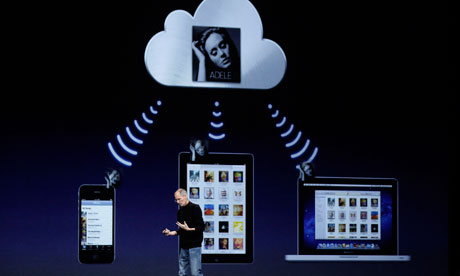 iTunes may be one of the best products that Apple ever developed, or at the very least, one of the smartest. Just a few weeks ago Apple released iTunes 11 with a myriad of visual and technical changes and improvements. iTunes will turn 12 years old in January, and in those years Apple has found a way to streamline, connect, condense, and centralize a user’s content and multimedia experience. With that in mind, I think it’s worth looking at a few of the existing features, the new ones in iTunes 11, and the future ones planned for next year to see just how they’ll continue to do that.
First let’s look at how Apple already connects users and their content across multiple devices. One of the earliest features that did this was the “Library Sharing” feature that enables users to share their library across 5 devices connected to the same network using the same Apple ID. This was great because a user could have a whole collection on their desktop computer and access that same collection on their laptop. With this feature, users can also share content with other people on their WiFi network.
A similar feature that’s been out for a few years is AirPlay. AirPlay allows users to stream media from one device across multiple devices on their WiFi network. For example, a user can start listening to an album or playlist in one room and stream it to their home stereo in their living room. Users can even adjust which devices are playing at what time and the volume of those individual devices. Apple TV even lets users stream a movie from their computer on their Apple TV. Of course, all of these devices are controllable with an iPhone, iPod, or iPad.
Finally, with iTunes 11 and the updated iTunes store, all of a user’s downloads are automatically synced to the iCloud and accessible by any other iCloud capable device. This means a song downloaded in the iTunes store on your computer will be available on your iPod or iPhone. A similar service, iTunes Match, was released last year and allows users to pay an annual fee to have any of their music in their library uploaded to the iCloud, whether it was purchased or available in the iTunes store or not. These services could prove to be interesting competitors for Spotify, Rhapsody, Amazon, and other streaming/cloud based music delivery services.
Lastly, Apple recently announced that it will launch its own streaming radio service to compete with Pandora in the first few months of 2013. Like the aforementioned services, it will be available across iPhones, iPods, iPads, Macs, and PC’s as part of iTunes.
With all of these developments that have made Apple products so seamlessly integrated into a person’s life, it seems Tim Cook is moving forward to fulfill Steve Jobs’ goal of having an Apple device in every home. Cloud storage and online streaming is all the rage right now, and Apple’s solutions could prove to be big problems for its competitors. With so many solutions to a user’s content needs, why would they bother going elsewhere?
Kelli Richards
CEO of The All Access Group
 In my newest book, The Magic and Moxie of Apple: An Insider’s View, I compared Steve Jobs and John Lennon; two iconic legends of a generation that are no longer with us today. Coincidentally, today is John’s birthday and last week marked the 1 year anniversary of Steve’s death. For that reason, I feel that it is only right for me to pay homage to two of the most inspirational men in my life.
John Lennon was a rock star in every sense of the world. He had it all; the fame, the fortune, the glory, etc but you would never guess it from his bashful demeanor on the camera. Steve Jobs was also a rock star but in a less literal sense. He attained the same iconic level of fame and fortune as Lennon, but through technology. Their success can’t be attributed to themselves alone; they both had an amazing team around them. However, both had the courage and vision to try something new and it worked.
I remember being a little girl when I was 8 years old and watching the Beatles doing a TV special (maybe it was “All You Need is Love”.) Apart from being electrified by their performance, the man behind the curtain playing with all the buttons and knobs (George Martin) lit a spark in me that set me on the career path that brought me to where I am today. As I watched Martin and the Beatles I thought to myself, “That’s what I want to do with my life,” and so I set out to make it happen. Similarly, growing up in Cupertino was the other half of my inspiration. At the time they started, no one knew how great Apple would be, but as the company started to take off I knew that working there would be a dream.
So this is my “thank you” to John & to Steve. Without these two legends, who knows if I would have ever developed personally and professionally into the person I am today. If they’re up there watching over us, I hope they know what a profoundly wonderful impact they’ve had on millions of lives.
Even for me, as an Apple insider, seeing the Apple “Best Practices” in action is awe inspiring. No one can deny that one of the most amazing things about Apple is how they embrace secrecy as an asset. No entity keeps a secret better than Apple – AND the thousands and thousands of employees and alum in their tribe. Quite simply it’s part of our Apple DNA. And that idea translates far into how they work with their products, and especially, their users. For Apple Inc., user experience goes far beyond what the customer can see, feel and touch. It goes on behind the veil as well.
Steve Jobs talked about this himself when he was interviewed at the All Things D8 Conference in 2010.
“No, silicon valley is not monolithic. We’ve always had a very different view of privacy than some of our colleagues in the valley, we take privacy extremely seriously. As an example, we worry a lot about location in phones and we worry that some 14 year old is going to get stalked and something terrible is going to happen because of our phone, and so as an example, before any app can get location data we don’t make it a rule that they have to put up a panel and ask because they might not follow that rule. They call our location services, and we put up the panel saying this app wants to use your location data, is that okay with you. Every time they want to use it and we do a lot of things like that to ensure that people understand what these apps are doing. That’s one of the reasons we have the curated app store. We have rejected a lot of apps that want to take a lot of your personal data and suck it up into the cloud, a lot. So we’re really old, a lot of people in the valley think we’re very old fashioned about this and maybe we are, but we worry about stuff like this.
No, privacy means people know what they’re signing up for in plain English and repeatedly. That’s what it means. I’m an optimist, I believe people are smart and some people want to share more data than other people do – ask them. Ask them every time. Make them tell you to stop asking them if they get tired of your asking them. Let them know precisely what you’re going to do with their data.”
Just another example of behind-the-scenes USER experiences – one of the best “best practices” that Apple does differently.
If YOU would like to learn more about Apple’s best practices and how those could work in YOUR company or work, sign up at https://AppleInsiderSecrets.com and become part of my own inner circle and get all of my insider, best practice tools and event invitations.
Kelli Richards, President and CEO
The All Access Group, LLC